Cannabis for Treating IBD: Hope or Hype?
Nausea, abdominal pain and changes in appetite. These are all things that can significantly impact one’s wellbeing if left untreated, yet they have all shown marked improvements when associated with cannabis.
Yet, less is known about the effects of cannabis on inflammatory bowel disease, or IBD, a chronic inflammatory condition that impacts the gastrointestinal tract of over 3.1 million Americans a year.
Michigan Medicine’s Jami Kinnucan, M.D., a gastroenterologist and assistant professor, specializes in IBD, ulcerative colitis, Crohn’s disease and women’s gastrointestinal health. She spoke to Michigan Health about the use of cannabis as a treatment for IBD.
Stories you may be interested in
Combating Opioid Dependence
The opioid epidemic is a hot topic across the United States, along with the alternatives that could alleviate the tragic consequences the epidemic brings. Opioids, also known as narcotics, are strong prescription pain relievers such as oxycodone, hydrocodone and fentanyl. Although illegal, heroin is also considered to be an opioid. Most patients are introduced to…
Read More 
After 50 Years, U.S. Opens The Door To More Cannabis Crops For Scientists
After more than 50 years, the federal government is lifting a roadblock to cannabis research that scientists and advocates say has hindered rigorous studies of the plant and possible drug development. Since 1968, U.S. researchers have been allowed to use cannabis from only one domestic source: a facility based at the University of Mississippi, through a…
Read More 
Americans Are Googling CBD More Than Acupuncture, Meditation And Exercise, Study Finds
People are increasingly more interested in CBD—or cannabidiol—than other health trends such as acupuncture, apple cider vinegar, exercise and veganism, according to a new review. In fact, the non-intoxicating cannabis compound has risen in popularity so much that people Google it nearly as much as they do for yoga and e-cigarettes. In a paper published…
Read More 
Thanks to the Farm Bill, Hemp Is Legal. Here’s What It Means for CBD.
On Tuesday, the Senate voted to approve a new an $867 billion farm bill, and on Wednesday, it passed in Congress. While the bill has plenty of positive merits, the one people are perhaps most excited about is the fact that it will legalize the production, sale, and distribution of industrial hemp at a federal…
Read More 
Former Detroit Lions players announce partnership with Harvard to study marijuana
Former Detroit Lions football players Calvin Johnson and Robert Sims are expanding their emerging cannabis enterprise into the field of medicine. The pair announced an agreement Thursday with the International Phytomedicines and Medical Cannabis Institute at Harvard University, which is researching the benefits of medical marijuana and looking at the best ways to deliver cannabis-based…
Read More 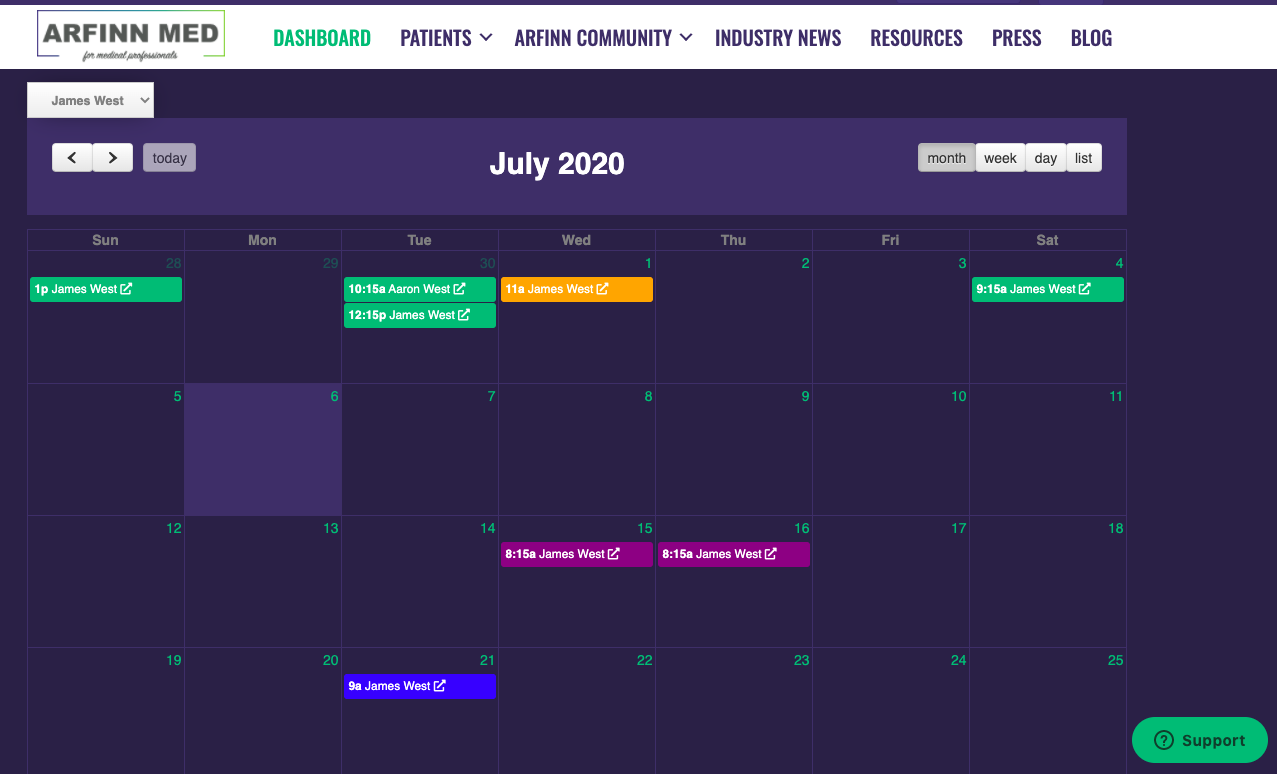
Updated Arfinn Med Scheduler
As your practice begins to grow, it’s important that your booking system is able to keep up. That’s why Arfinn Med has just released, in its newest update, the multi-view scheduling and booking platform. This allows you and/or your staff the ability to customize appointment types, hours of availability, display name, and confirmation emails for…
Read More